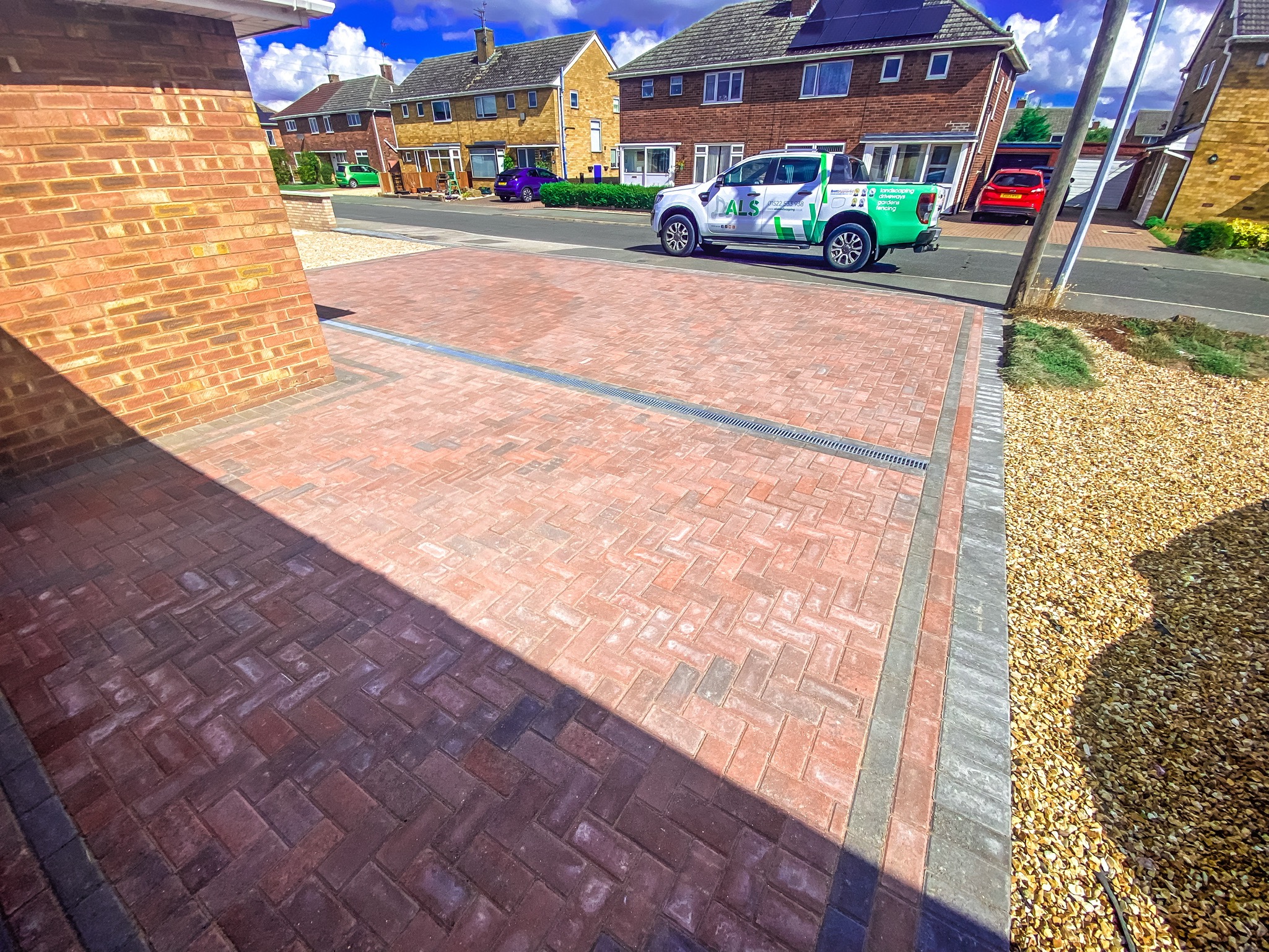
After weeks of glorious sunshine, checking whether your driveway is ready for rain probably isn’t at the top of your August to-do list. However, long dry spells can allow dust, leaves, weeds and other debris to build up. Small cracks may also go unnoticed until the first proper downpour sends water exactly where you don’t want it.
A little preparation now can help prevent blocked drainage, standing water and further surface damage when the rain inevitably returns.
At a Glance
If you’re finding yourself with little to no time to read the full blog – here’s a snippet.
- Sweep away leaves, soil and loose debris.
- Clear drainage channels and grates.
- Check for cracks, sinking and loose blocks.
- Remove weeds before their roots cause further movement.
- Clean oil and other surface stains.
- Watch where the water travels during the next rainfall.
- Ask a professional to investigate persistent pooling or drainage problems.
Start with a Thorough Sweep
Begin by removing everything that has collected across the driveway during the dry weather. Leaves, grass cuttings, soil, loose stones and litter can all be carried towards drainage channels when it rains.
A stiff outdoor brush is usually all you need. Pay particular attention to:
- The edges of the driveway
- Gaps between paving blocks
- The area around drainage covers
- The point where the driveway meets the pavement
- Corners where leaves and debris naturally gather
This is a simple job, but it can make a considerable difference. A small pile of dry leaves can quickly turn into a soggy blockage during heavy rain.
Clear Your Driveway Drainage Channels
If your driveway has linear drainage channels or grates, check that they’re clear before the weather changes. Lift removable covers where it’s safe to do so and remove any leaves, soil or silt sitting underneath.
Also check where the channel discharges. Clearing the visible grate won’t solve the problem if the outlet itself is blocked.
The Met Office recommends checking drains and gutters as part of preparing your home for heavy summer rainfall.
If water regularly collects on your driveway even when the channels are clear, there may be a problem with the fall of the surface, the drainage beneath it or the capacity of the existing system. Our guide to driveway drainage solutions explains some of the longer-term options available.
Look for Cracks, Loose Blocks and Sunken Areas
Dry weather doesn’t always create driveway damage, but it can make existing problems easier to spot. Walk slowly across the surface and look for:
- Cracks that have become wider
- Loose or rocking paving blocks
- Areas that appear lower than the surrounding surface
- Gaps around drainage channels or edging
- Crumbling joints
- Small potholes or worn patches
Water will naturally find the weakest point. Once it enters a crack or gap, it can affect the material and supporting layers beneath the surface. Over time, that may turn a minor repair into a much larger problem.
Our blog on dealing with driveway potholes and cracks will help you identify which problems may need professional attention.
Remove Weeds Before the Rain Encourages New Growth
Weeds have an annoying habit of appearing between block paving, along driveway edges and inside tiny cracks. They may look relatively harmless, but established roots can widen gaps and disturb jointing material.
Pull out smaller weeds by hand, removing as much of the root as possible. Avoid using tools that could chip blocks or damage a resin surface.
If you have block paving, check whether removing the weeds has left empty joints. These joints may need to be replenished with the correct kiln-dried sand once the surface is completely dry. The sand helps lock the paving blocks together, so it shouldn’t be treated as a purely cosmetic finishing touch.
Clean Stains Carefully
Oil, fuel and other vehicle fluids can become more noticeable when rainwater spreads them across a driveway. Deal with fresh spills promptly using a suitable absorbent material and a cleaning product recommended for your particular surface.
Be cautious with pressure washing. Excessive pressure or using the nozzle too close to the surface can remove jointing sand, damage softer materials and disturb some resin-bound finishes. If you’re unsure, check the installer’s care instructions before reaching for the pressure washer.
Different driveway materials have different maintenance requirements. If your existing surface is becoming difficult to look after, our guide to choosing the best type of driveway offers a useful comparison.
Check Where the Rainwater Goes
The first decent spell of rain gives you the perfect opportunity to see how well your driveway is working. You don’t need to stand outside in a downpour, but take a look from a safe, sheltered position and check:
- Whether water flows towards the drainage channels
- Whether puddles develop and remain in the same places
- Whether water runs towards your house, garage or neighbouring property
- Whether the drains cope without backing up
- Whether soil or mulch washes from nearby borders onto the driveway
Persistent pooling shouldn’t be ignored. It can indicate a low spot, blocked drainage or an issue with the driveway’s construction.
Government guidance on permeable surfacing explains how surfaces such as gravel, permeable block paving and porous asphalt can reduce rainwater runoff. It also highlights the option of directing water towards a lawn, border, soakaway or rain garden rather than allowing it to overwhelm conventional drains.
Think Beyond the Driveway
Sometimes the water on a driveway is coming from somewhere else. Overflowing gutters, compacted borders, sloping lawns and poorly positioned downpipes can all send extra water across the surface.
If your driveway and garden need to work better together, ALS Landscaping can help with wider landscaping and garden drainage solutions. A well-designed border or rain garden can help manage runoff while adding colour and interest to the front of your property.
Prepare Now, Before the Weather Changes
Preparing your driveway for rain doesn’t need to take all weekend. A thorough sweep, a quick drainage check and a careful look for early signs of damage may be enough to prevent avoidable problems later.
Most importantly, watch how the driveway behaves when the rain returns. If water drains quickly and travels away from buildings, that’s a good sign. If it pools, backs up or runs towards your home, it’s worth getting professional advice before autumn brings longer and more frequent spells of wet weather.
Is Your Driveway Ready for Autumn?
If your driveway has persistent puddles, cracks, sinking areas or inadequate drainage, ALS Driveways can assess the problem and recommend a practical, long-lasting solution.
Whether you need repairs, improved drainage or a completely new driveway, contact ALS Driveways Lincoln to arrange a survey and discuss the options available for your property.
FAQs
Why does water suddenly pool on my driveway?
Pooling may be caused by blocked drainage, accumulated debris, sinking paving or an incorrect fall. Clear the drains first. If the water continues to collect in the same place, ask a driveway specialist to inspect the surface and its underlying construction.
Should I pressure-wash my driveway before the rain returns?
You can clean many driveway surfaces with a pressure washer, but the pressure and technique must suit the material. Aggressive washing can remove jointing sand from block paving or damage some surfaces. Always check the correct maintenance guidance first.
Can I improve the drainage on an existing driveway?
Yes. Depending on the driveway and surrounding ground, possible improvements include new drainage channels, repairs to sunken areas, a soakaway, permeable paving or directing runoff into a suitable planted border. A professional site assessment will determine which option is appropriate.