We talked about Why Driveway Gates Shouldn’t Open Outwards, in our last blog. If you haven’t had an opportunity to read it, but you’re thinking about having a driveway installed in Lincoln, please do. It will give you a quick overview of the dos and don’ts when it comes to driveway gates.
If you’re anything like us at ALS Driveways Lincoln, you’ll have noticed that driveway bollards are increasingly becoming a fixture of UK homes and commercial properties. They offer a multitude of benefits including improving security, managing traffic, and enhancing aesthetic appeal. However, just like any other decision when it comes to property development, installing driveway bollards comes with its own set of considerations.
Why Consider Driveway Bollards?
The primary reason many UK homeowners and property developers consider installing driveway bollards is for enhanced security. In an article published by Bollard Security, they suggest that installing a driveway bollard is one of the most effective ways to protect your vehicle from car thieves.
The bollards themselves are versatile; they come in various styles, designs, and sizes, meaning there’s one to suit every property type. According to ATG, they fall into four main types, telescopic, removable, automatic and fixed. Whether you prefer the removable or foldable boards or remotely controlled telescopic bollards, or even automatically time-controlled bollards, they all offer an effective means of traffic management, particularly useful for commercial properties with high vehicle turnover and especially for homeowners who are ‘space poor’ or would prefer not to have a driveway gate. It’s important to note however, that domestic security bollards aren’t generally ‘impact’ tested, although they are designed to protect what’s on your driveway.
Driveway bollards also provide a clear visual prompt for drivers to avoid pedestrian areas and act as a physical barrier.
The Cost
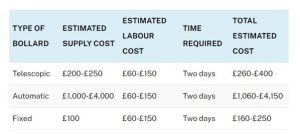
As always, the cost varies depending on factors such as the type of bollard (manual, semi-automatic, automatic), material, and the labour charges for installation. A basic telescopic bollard can start from around £200, while a high-end automatic bollard can cost upwards of £1,000, excluding installation charges.
Household Quotes.co.uk published the following table which shows estimated costs of the most common types of security bollards in the UK:
Checkatrade published a more comprehensive price guide:
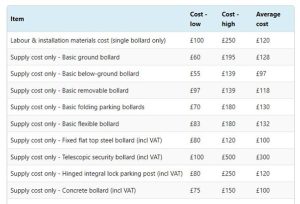
At ALS Driveways Lincoln, we would always suggest you check the current price, especially in the current economic climate.
How long will my Driveway Bollard last?
When it comes to longevity, according to Armcodirect Limited, a high quality bollard can last over 30 years. They really are built to last. Their sturdy construction from durable materials like stainless steel coupled with the ability to resist weathering and corrosion contributes to their impressive lifespan.
Pros and Cons of Driveway Bollards
Pros
Increased Security: Driveway bollards act as a physical barrier deterring unauthorised access and vehicle theft. They also protect your property from ram-raiding incidents.
Traffic Management: Bollards help manage vehicle movement, especially useful in properties with high traffic flow.
Aesthetic Appeal: Stylish bollards can enhance the visual appeal of your property.
Cons
Initial Investment: The cost of purchase and installation of bollards, particularly automatic ones, can be high.
Maintenance Cost: Regular maintenance is necessary to ensure longevity. This includes repainting, lubrication, and in the case of automatic bollards, periodic inspection of the electrical systems.
Potential for Damage: Inefficient use or accidental collisions can lead to damage, requiring expensive repairs.
Alternatives to Driveway Bollards
If driveway bollards don’t appeal to you or don’t fit within your budget, a viable alternative is the installation of driveway gates. “Driveway gates, when coupled with security cameras and lighting, provide an effective, deterrent and a stylish alternative to bollards,” advises Anna Thompson, a property developer at Thompson Homes.
Driveway gates come in various designs, from classic wrought iron to sleek automatic sliding gates. The cost can vary significantly based on the materials, design, size, and the automation system used. A standard metal gate may cost around £500-£1,000, while premium automated gates can go up to £5,000 or more, excluding installation charges. Check out some of our completed projects to give you some inspiration for your project.
Conclusion
Whether you decide to install driveway bollards or opt for an alternative like driveway gates for your new driveway, it’s crucial to consider the security needs, budget, and aesthetic preferences of your property.
Remember, the security and appearance of your property should reflect the care and value you put into it. With the right choice, you can ensure that your property remains secure, aesthetically pleasing, and value-enhancing, no matter what your choice may be.
Remember ALS Driveways are only a phone call away. We can help you to make informed decisions about your driveway and security, and make sure they not only add value to your property but also contribute to the overall safety and functionality of your home.