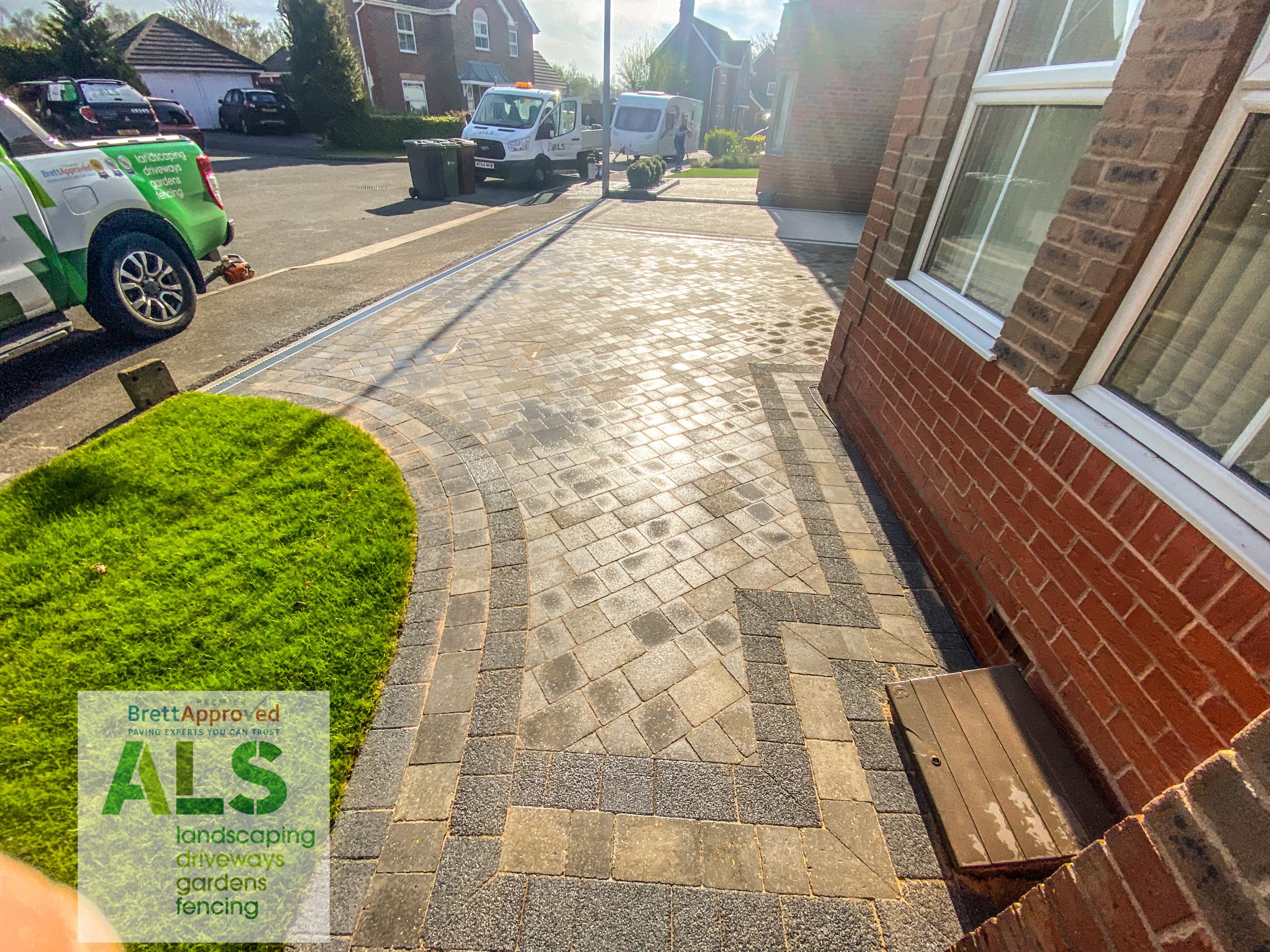
When you’re planning a new driveway, there are plenty of things to get excited about. The colour of the paving, the pattern, the edging and whether it’ll make the neighbours have a second look when they’re putting the bins out.
Drainage, on the other hand, rarely gets anyone particularly enthusiastic. Nobody sits down with a cup of tea on a Sunday afternoon dreaming about surface water management. But when the heavens open and there’s a puddle outside your front door big enough to attract a family of ducks, suddenly it becomes rather interesting.
And as we head towards the end of October, there’s certainly no shortage of opportunities to see how well your driveway handles the British weather.
The thing is, good driveway drainage isn’t something you should have to think about very often. When it’s been properly designed and installed, rainwater should go where it’s supposed to go, without creating puddles around your car, running towards your garage or leaving you wondering whether you need wellies just to put the recycling out.
So, where should all that water actually go? And how can you tell whether your driveway is doing its job?
At a Glance
- Driveway drainage is about controlling where rainwater goes, rather than simply getting it off the surface.
- The slope of your driveway, known as its fall, plays an important part in directing water.
- Conventional and permeable block paving manage rainwater differently.
- Drainage channels need to lead somewhere suitable. A channel with nowhere for the water to go isn’t much use.
- Poor ground preparation can cause a driveway to sink, creating new areas where water collects.
- Planning rules in England can affect how surface water from front driveways must be managed.
- Autumn is a useful time to spot drainage problems that might have gone unnoticed during drier months.
Why Does Driveway Drainage Matter So Much?
A little rainwater on your driveway is hardly a national emergency. We’re in Britain, after all. If we worried every time it rained, we’d never get anything done.
But there’s a difference between a driveway getting wet and one that regularly resembles the shallow end of the local swimming pool.
When water collects in the same places after every downpour, it can make getting in and out of the car awkward, particularly when you’re carrying shopping, wrestling with an umbrella or trying to persuade the dog that a walk in the rain is actually a lovely idea.
Standing water can also encourage dirt and organic growth to accumulate, while winter temperatures bring the added possibility of ice. More importantly, persistent puddles can sometimes be a sign that the driveway’s levels have changed or that its drainage isn’t working as intended.
Of course, a puddle doesn’t automatically mean there’s a serious problem. Even a well-designed drainage system can struggle temporarily during exceptionally heavy rainfall. What matters is whether the water eventually drains away properly and whether the same trouble spots keep appearing.
At ALS Driveways, we consider drainage from the outset of an installation, alongside excavation, sub-base preparation, levels and falls. They’re not the glamorous bits of a new driveway, admittedly, but they’re often the difference between something that looks good on the day it’s finished and something that continues to perform properly for years afterwards.
Where Should Rainwater From Your Driveway Actually Go?
You might think the answer is fairly straightforward: somewhere other than your driveway.
And while that’s technically true, there’s a little more to it.
Rainwater needs a suitable destination, and the right solution will depend on the size and slope of your driveway, the type of paving being installed, the surrounding ground and how the rest of your property is laid out.
Some driveways are designed to allow water to pass through a permeable paving system. Others use carefully planned slopes to direct water into drainage channels, towards a suitable landscaped area or into an appropriately designed drainage system.
What you don’t want is water being directed towards your house, across the pavement or onto your neighbour’s property. Nobody wants to start a disagreement over whose driveway is sending a small river next door.
It’s also worth remembering that a drainage channel isn’t a complete solution on its own. It needs to be connected to an appropriate outlet or drainage arrangement. Otherwise, you’re simply collecting water without properly dealing with it.
The UK government’s guidance on permeable surfacing of front gardens explains different ways of managing surface water, including permeable paving, soakaways and suitable landscaped areas.
The important thing is choosing a system that works for your particular property rather than assuming that whatever worked for the house down the road will automatically work for yours.
Conventional or Permeable Block Paving: What’s the Difference?
Block paving remains a popular choice for driveways, and it’s easy to understand why. There’s a wide selection of colours, styles and laying patterns, so you can create something that complements your home rather than looking like an afterthought.
But when it comes to drainage, not all block paving works in the same way.
Conventional Block Paving
With conventional block paving, rainwater is generally managed by the slope of the finished surface. The driveway is laid with carefully planned levels and falls that encourage water to travel towards suitable drainage points.
The blocks sit on a properly prepared supporting structure, with jointing material between them. Although some moisture may enter the joints, that doesn’t make a conventional block paved driveway a permeable drainage system.
It still needs an appropriate way of dealing with surface water.
Permeable Block Paving
Permeable block paving is designed differently. Rather than relying primarily on water running across the surface, it allows rainwater to pass through the paving system.
And this is where the construction underneath becomes particularly important.
The blocks, joints, bedding and sub-base all need to work together. Depending on the design and ground conditions, water may be allowed to soak into the ground beneath or be collected and discharged through a controlled outlet.
Simply buying permeable blocks and laying them over an unsuitable conventional base won’t necessarily give you a properly functioning permeable driveway.
It’s a bit like buying a waterproof coat and leaving the zip undone. You’ve got the right idea, but something important has been missed.
The right approach depends on the site, which is why drainage and ground preparation should be considered before the paving is chosen and installed.
Why Getting the Levels Right Makes Such a Difference
Have you ever noticed that a professionally installed driveway can look almost perfectly flat, even though rainwater flows away from it?
That’s because a driveway doesn’t necessarily need an obvious slope to drain properly. It needs carefully designed falls, which are the gradients that encourage water to move in the intended direction.
Getting those levels right is particularly important around garage entrances, doorways, steps, inspection covers and the point where the driveway meets the pavement.
If the driveway naturally slopes towards your house, for example, the drainage design needs to take that into account. Otherwise, heavy rain could end up travelling in precisely the direction you don’t want it to go.
And while it might be tempting to think that a drainage channel can sort everything out afterwards, it isn’t always that simple.
Good drainage starts with planning the levels before the driveway is laid. Once the paving is down, correcting poorly designed falls can involve considerably more work than getting them right in the first place.
It’s one of those jobs where careful preparation isn’t particularly exciting to watch, but you’ll certainly appreciate it when the rain arrives.
Can Poor Groundworks Cause Drainage Problems?
Yes, and this is something we’ve seen first-hand.
A driveway isn’t just the paving you can see. Underneath the finished surface is a supporting structure that needs to be properly prepared and compacted to cope with the weight of vehicles and everyday use.
If that groundwork hasn’t been carried out correctly, the driveway may begin to settle unevenly over time.
And once the surface starts changing shape, the drainage can change with it.
Imagine a driveway that originally sloped gently towards a drainage channel. If part of the surface sinks, water may begin collecting in the depression instead of reaching the channel. The drainage might still be perfectly clear, but the water can no longer get to it properly.
We encountered exactly this sort of problem when replacing a 20-year-old block paved driveway in Lincoln.
The original driveway had suffered from sinking and rutting because the groundworks hadn’t been adequate. To make matters worse, the drainage had been poorly installed and was no longer functioning correctly.
Our team removed the existing driveway and addressed the underlying problems before installing new galvanised drainage channels, correctly connected to the existing drainage system. The driveway was then completed using Brett block paving.
It was a good example of why replacing a few uneven blocks or clearing a drain isn’t always enough.
If the problem starts beneath the surface, that’s where the solution needs to begin.
It’s also why homeowners noticing wheel ruts, sinking or changes in surface levels may find our earlier guide to why driveways sink useful. These problems aren’t always cosmetic, and it’s worth understanding what may be happening underneath.
Do You Need Planning Permission for Driveway Drainage?
This is one of those subjects that can sound more complicated than it really is, although it’s important to get the details right.
In England, planning rules for front driveways take account of the area being paved and how rainwater will be managed.
Generally, if you’re installing or replacing more than five square metres of impermeable surfacing in a front garden, planning permission may be required unless the water is directed to a suitable permeable area within the property’s grounds.
Using an appropriate permeable surface can also allow work to fall within permitted development rights, subject to any other restrictions affecting the property.
So, no, installing a block paved driveway doesn’t automatically mean you’ll need planning permission. But neither should you assume that adding a drainage channel means everything has been taken care of.
It’s the overall drainage arrangement that matters.
You can find more information in the official government guidance on permeable surfacing.
If your property is listed, subject to additional planning restrictions or has unusual drainage requirements, it’s sensible to check with the local planning authority before work begins.
Nobody wants to finish a lovely new driveway only to discover there’s a planning issue that should have been dealt with beforehand.
How Can You Tell Whether Your Driveway Is Draining Properly?
One advantage of the wetter autumn weather is that it gives you a fairly good opportunity to see what your driveway is doing when it rains.
You don’t need to stand outside in a downpour with a clipboard and a stopwatch. Just have a look once the worst of the rain has passed.
Notice where the water collects and which direction it travels. Does it flow towards the intended drainage points, or are there areas where it seems to have nowhere to go? Does the driveway dry reasonably evenly, or is there one particular patch that stays wet long after the rest?
It’s also worth looking at whether any blocks have sunk or whether the surface has become uneven. A puddle that has only started appearing recently may be telling you something about a change in the driveway’s levels.
Of course, sometimes the explanation is much simpler.
Autumn leaves have a remarkable ability to find their way into every drainage channel and corner of a driveway. One minute they’re looking lovely on the trees, and the next they’re blocking the grate outside your garage.
Keeping channels clear is an important part of routine maintenance, particularly at this time of year.
Our October guide, How to Look After a Block Paving Driveway: An Autumn & Winter Maintenance Guide, covers practical maintenance tasks including sweeping, clearing drainage channels, dealing with weeds and checking jointing sand.
The key is knowing the difference between a maintenance issue and something that needs a closer look.
A blocked channel might simply need clearing. A driveway that’s sinking and sending water in the wrong direction is a different matter altogether.
What Happens When the Driveway Drains but the Garden Doesn’t?
Sometimes the driveway itself isn’t the whole problem.
Your driveway, garden, paths and patio are all part of the same outdoor space, and water doesn’t pay much attention to where one finishes and another begins.
If rainwater is directed towards a landscaped area, for example, the ground needs to be suitable for receiving it. If that area is already waterlogged or has poor drainage, the wider situation needs to be considered.
Similarly, water running from a higher garden or neighbouring area may affect the driveway, even when the paving itself has been installed correctly.
This is why it can be useful to look at the property as a whole rather than treating every wet patch as a separate problem.
Our colleagues at ALS Landscaping explore some of these wider issues in their article, Does Your Garden Drain Properly? Signs You Might Have a Drainage Problem.
If your lawn regularly resembles a marsh and your driveway isn’t much better, it’s worth understanding how water is moving around the entire property.
After all, there’s not much point solving one drainage problem if you’re simply moving it somewhere else.
Is Autumn a Good Time to Think About Replacing Your Driveway?
You might assume that spring and summer are the obvious times to start planning a new driveway. And while the warmer months are certainly popular for outdoor improvements, autumn can be a useful time to assess what needs doing.
For one thing, the weather tends to reveal problems that were easy to overlook during a dry spell.
That little dip in the paving that barely registered in July might now be collecting water every time it rains. A drainage channel that seemed perfectly adequate during summer might be struggling with heavier autumn downpours.
You may also notice that water is running towards your garage, that blocks have started moving or that an older driveway is looking increasingly uneven.
Rather than simply putting up with these issues until the weather improves, autumn gives you an opportunity to start thinking about what needs to change.
A properly planned replacement can address drainage, ground preparation, levels, edging and the overall appearance together, rather than dealing with problems one at a time.
And there’s something rather satisfying about knowing that when your new driveway is finished, you won’t have to perform an obstacle course around the puddles every time you leave the house.
A Good Driveway Should Look Great and Work Properly
When you invest in a new driveway, you naturally want something that makes your home look better.
But the best driveways have more going for them than an attractive surface.
They’ve been properly excavated, carefully prepared and installed with the right levels, supporting structure, edging and drainage arrangements for the property.
Those are the details that aren’t always obvious when you’re admiring the finished paving, but they play an important part in how well the driveway performs over time.
At ALS Driveways, we’ve been designing and installing driveways in Lincoln and across Lincolnshire for more than 20 years. We understand that every property is different, and that a successful installation needs to take account of both appearance and practical performance.
If your existing driveway is developing puddles, sinking or struggling to cope with heavy rainfall, or you’re thinking about replacing it with a professionally installed block paved driveway, contact ALS Driveways to discuss your project.
Because while we can’t do much about the British weather, we can certainly help make sure your driveway is properly prepared for it.
FAQs
Why does water keep pooling on my driveway?
Water can collect for several reasons, including incorrect surface falls, blocked drainage channels, localised sinking or an unsuitable drainage arrangement. A temporary puddle during particularly heavy rainfall doesn’t necessarily indicate a serious problem, but if water regularly collects in the same place, it’s worth investigating why.
Does block paving need drainage?
Yes. Every driveway needs a suitable way of managing rainwater. Conventional block paving generally uses carefully designed surface falls to direct water towards drainage points, while purpose-designed permeable block paving systems allow water to pass through the paving structure. The right solution depends on the property and its ground conditions.
Can driveway drainage problems be fixed without replacing the whole driveway?
Sometimes. If the problem is simply a blocked drainage channel or a small localised defect, the solution may be relatively straightforward. However, if the driveway has sunk because of inadequate groundworks or the original levels were incorrect, more extensive repairs or replacement may be necessary. Identifying the cause is the important first step.
Do I need planning permission for a new driveway in Lincolnshire?
Not necessarily. In England, front driveway installations can often be carried out under permitted development rights when appropriate permeable surfacing or suitable surface water drainage arrangements are used. Impermeable surfacing covering more than five square metres may require planning permission if runoff isn’t directed to a suitable permeable area. Additional restrictions can apply, so it’s worth checking the requirements for your property.