We talked a lot recently about how driveways can help to secure your property, why driveway gates shouldn’t open outwards, and when it’s safe to have a driveway without a dropped kerb.
Today, we’re breaking down a topic that many of us give little thought to until it’s staring us in the face – the installation process. When you’re in the trade, like ALS Driveways Lincoln, we often forget that you don’t know what you don’t know.
You might be wondering, why driveways? Well, obviously driveways are our bread and butter, in addition to this these humble pathways not only provide access to our homes but also contribute significantly to the curb appeal and value of our properties. It’s a question we get asked a lot! “What’s involved?”
So here’s an overview of what the installation process involves. To keep things clear and concise, we’ll avoid technical jargon and stick to layman’s terms. After all, this isn’t a course in civil engineering – it’s a friendly chat about driveways!
Planning is Paramount
As with all good things, a successful driveway installation starts with a well-thought-out plan. Fail to prepare, prepare to fail. We’ve all heard it and at ALS Driveways in Lincoln it’s one of our mantras. This isn’t just about the size and shape of the driveway but also considerations such as the type of material to use and how to effectively manage drainage. It’s also important to consider the local climate conditions, anticipated traffic volume and the type of vehicles that are expected to use the driveway. This helps us, to help you, choose the materials that will ensure longevity and durability without compromise.
The choice of material for your driveway in Lincoln can significantly impact the installation process, cost and longevity. For example, gravel is generally cheaper and quicker to install than tarmac or concrete, but usually requires more maintenance in the long run. We go into more detail in our blog “Which Driveways last the longest?”.
Clearing the Area
Whether you’re updating a tired and worn driveway, or installing a new one, next on the list is clearing the area. This often involves removing any existing driveway material, grass, or soil. In some cases, the ground might need to be levelled, particularly if the property is on an incline. It’s essential to get this step right – as the old saying goes, a good workman never blames his tools, but a good driveway always relies on its foundation!
Checkatrade have produced a useful ‘Planning a new driveway checklist’. They state that, “The most important part of any driveway installation is that your ground is properly prepared. Without that, any materials laid on top of it will likely sink.” Let’s face it, nobody wants to come home to a sunken driveway.
Driveway Expert go further suggesting that ‘A Little Excavation Goes a Long Way,’ and if you miss out this step you’ll probably have to start over again in a few years’ time.
Laying the Foundation
Speaking of foundations, this is where things get a little more interesting. For driveways, this typically involves a sub-base layer to provide stability, and a layer of sand to facilitate drainage. When it comes to the depth of the foundations there’s lots to consider, you can read more about this in our blog ‘5 Tips To Stop Your Driveway From Sinking’. One thing you can be sure of is that if you use and approved installer, they’ll get your foundations right so you won’t get ‘that’ sinking feeling.
Installing the Driveway
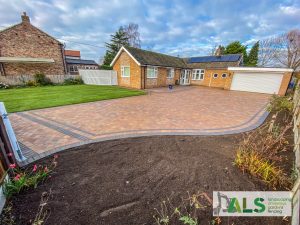
Once the area has been cleared, and the foundations have been laid, we come to the main event – the actual installation of the driveway. This process will vary depending on the type of material used. For example, if it’s concrete, it will be poured, spread, and then left to cure for several days. If it’s block paving, the pavers will be individually placed in a predetermined pattern. There are so many different driveways to choose from, but at ALS Driveways Lincoln the one we get asked for the most is Block Paving. Take a look at our Projects Page and you’ll see why!
Each type of driveway has its pros and cons, we’ve included some in our ‘Which type of driveway is the best?’ blog. It’s worth taking the time to research which option is best for your property and lifestyle. The best driveway for your property isn’t necessarily the most expensive one. It’s the one that meets your needs and complements your home’s style and ALS Driveways Lincoln is always here to help you make the right choice for you.
The Finishing Touches
After the driveway is installed, it’s time for the finishing touches. This could include anything from sealing the material to enhance its durability, to landscaping the surrounding area to boost the overall aesthetic appeal. The great news is that if you decide you want to go ahead with landscaping, ALS Landscaping Lincoln has got you covered.
Conclusion
The driveway installation process may seem a little daunting at first, but with the right planning and professional help, it can be a smooth ride. And remember, while we all want our driveways to look good, they also need to be practical and durable. After all, a driveway is more than just a place to park your car – it’s the first impression people get of your home and when installed by professionals it can greatly enhance the value of your home in Lincoln and the surrounding areas.
So whether you’re sprucing up your property in Lincoln or developing a new estate in the surrounding areas, hopefully, this has given you a better understanding of what installing a driveway involves. If you have any more questions or if there’s anything else you’d like us to unpack, don’t hesitate to give us a call or send us a message. We’re here to help!