Securing Your Property: The Rising Trend of Driveway Bollards in the UK

We talked about Why Driveway Gates Shouldn’t Open Outwards, in our last blog. If you haven’t had an opportunity to read it, but you’re thinking about having a driveway installed in Lincoln, please do. It will give you a quick overview of the dos and don’ts when it comes to driveway gates.

If you’re anything like us at ALS Driveways Lincoln, you’ll have noticed that driveway bollards are increasingly becoming a fixture of UK homes and commercial properties. They offer a multitude of benefits including improving security, managing traffic, and enhancing aesthetic appeal. However, just like any other decision when it comes to property development, installing driveway bollards comes with its own set of considerations.

Why Consider Driveway Bollards?

The primary reason many UK homeowners and property developers consider installing driveway bollards is for enhanced security. In an article published by Bollard Security, they suggest that installing a driveway bollard is one of the most effective ways to protect your vehicle from car thieves.

The bollards themselves are versatile; they come in various styles, designs, and sizes, meaning there’s one to suit every property type. According to ATG, they fall into four main types, telescopic, removable, automatic and fixed. Whether you prefer the removable or foldable boards or remotely controlled telescopic bollards, or even automatically time-controlled bollards, they all offer an effective means of traffic management, particularly useful for commercial properties with high vehicle turnover and especially for homeowners who are ‘space poor’ or would prefer not to have a driveway gate. It’s important to note however, that domestic security bollards aren’t generally ‘impact’ tested, although they are designed to protect what’s on your driveway.

Driveway bollards also provide a clear visual prompt for drivers to avoid pedestrian areas and act as a physical barrier.

The Cost

As always, the cost varies depending on factors such as the type of bollard (manual, semi-automatic, automatic), material, and the labour charges for installation. A basic telescopic bollard can start from around £200, while a high-end automatic bollard can cost upwards of £1,000, excluding installation charges.

Household Quotes.co.uk published the following table which shows estimated costs of the most common types of security bollards in the UK:
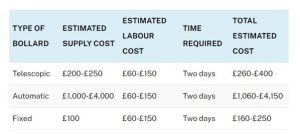
Household Quotes Driveway bollards

Checkatrade published a more comprehensive price guide:
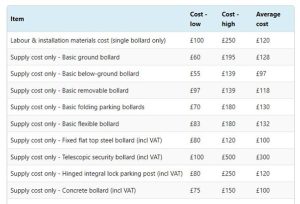
Driveway bollards in Lincoln

At ALS Driveways Lincoln, we would always suggest you check the current price, especially in the current economic climate.

How long will my Driveway Bollard last?

When it comes to longevity, according to Armcodirect Limited, a high quality bollard can last over 30 years. They really are built to last. Their sturdy construction from durable materials like stainless steel coupled with the ability to resist weathering and corrosion contributes to their impressive lifespan.

Pros and Cons of Driveway Bollards


Pros


Increased Security: Driveway bollards act as a physical barrier deterring unauthorised access and vehicle theft. They also protect your property from ram-raiding incidents.


Traffic Management: Bollards help manage vehicle movement, especially useful in properties with high traffic flow.


Aesthetic Appeal: Stylish bollards can enhance the visual appeal of your property.


Cons


Initial Investment: The cost of purchase and installation of bollards, particularly automatic ones, can be high.


Maintenance Cost: Regular maintenance is necessary to ensure longevity. This includes repainting, lubrication, and in the case of automatic bollards, periodic inspection of the electrical systems.


Potential for Damage: Inefficient use or accidental collisions can lead to damage, requiring expensive repairs.


Alternatives to Driveway Bollards


If driveway bollards don’t appeal to you or don’t fit within your budget, a viable alternative is the installation of driveway gates. “Driveway gates, when coupled with security cameras and lighting, provide an effective, deterrent and a stylish alternative to bollards,” advises Anna Thompson, a property developer at Thompson Homes.


Driveway gates come in various designs, from classic wrought iron to sleek automatic sliding gates. The cost can vary significantly based on the materials, design, size, and the automation system used. A standard metal gate may cost around £500-£1,000, while premium automated gates can go up to £5,000 or more, excluding installation charges. Check out some of our completed projects to give you some inspiration for your project.


Conclusion


Whether you decide to install driveway bollards or opt for an alternative like driveway gates for your new driveway, it’s crucial to consider the security needs, budget, and aesthetic preferences of your property.


Remember, the security and appearance of your property should reflect the care and value you put into it. With the right choice, you can ensure that your property remains secure, aesthetically pleasing, and value-enhancing, no matter what your choice may be.


Remember ALS Driveways are only a phone call away. We can help you to make informed decisions about your driveway and security, and make sure they not only add value to your property but also contribute to the overall safety and functionality of your home.


Why Driveway Gates Shouldn’t Open Outwards by ALS Driveways in Lincoln

At ALS, we know that you homeowners and property developers work hard to create a secure and functional living environment. One area that’s often overlooked, and generally not even thought about, is the direction in which your driveway gate swings.

At ALS Driveways in Lincoln, we’ve decided it’s time to put this one firmly on your agenda, especially if you’re considering having a driveway installed, because it is something that you should be thinking about.

Whilst it might make perfect sense to you, and could increase the usable space inside your driveway, the direction in which your gate swings can have significant implications. Ask yourself this, how many driveway gates have you seen that open outwards?

In this blog, we’ll explore why driveway gates shouldn’t open outwards, focusing on the importance of security, convenience and aesthetics.

Security Concerns

When it comes to securing our homes, every detail counts. Driveway gates that open out can pose potential security risks. A gate that swings out provides an easier opportunity for intruders to gain access to the property. By pushing against an outward-swinging gate, burglars can bypass many security measures, such as locks and alarms. This vulnerability can be mitigated by having a gate that swings inward instead.

According to a report by the UK’s Office for National Statistics, burglary rates have been on the rise in recent years, making it crucial to take every precaution to protect our homes and properties. Choosing a driveway gate that opens inward is a practical step in fortifying your property against potential threats.

Enhanced Convenience

In addition to security, convenience is key to consider when selecting the right driveway gate. Gates that open in are the norm and provide several benefits in terms of ease of use and functionality. If you want a gate to swing out, you’ll need a lot more space outside the property. You’d need to make sure that the gate wouldn’t obstruct the path of vehicles on the road, or pedestrians on the pavement. Just imagine the chaos and potential accidents an outward swinging gate could create!

By choosing a gate that swings in, you ensure your driveway remains unobstructed and easily accessible, enabling a smooth entry and exit for vehicles. This convenience is particularly important for larger properties, where maneuvering vehicles can be challenging without adequate space.

Aesthetics and Property Value

The visual appeal of your property plays a crucial role in its overall value. Driveway gates that open in are generally considered more aesthetically pleasing and can enhance the kerb appeal of your home. We talk more about this in our ‘Will a Driveway Add Value to My Property” blog. Not only will a driveway add kerb appeal, but it’ll also add value!

When gates swing outward, they interrupt the clean lines and architectural harmony of your home.

According to a study conducted by the Royal Institution of Chartered Surveyors (RICS), a well-maintained and aesthetically pleasing property can increase its market value by up to 10%. By choosing an inward-swinging gate, you contribute to the overall visual harmony of your property, potentially boosting its market appeal and value.

Legal Requirements and Planning Permission

Before installing or modifying a driveway gate, it’s important to be aware of any legal requirements or planning permission necessary in your local area. In the UK, some local councils have specific regulations regarding the direction in which driveway gates should open, especially in conservation areas or near public roads. It is always advisable to consult with your local council or planning department to ensure compliance with any regulations and obtain the necessary permissions.

In fact, Section 153 in the Highways Act 1980 deals specifically with this and reiterates the importance of seeking permission prior to installation, although in our experience, permission is rare.

Conclusion

When it comes to securing your home and ensuring convenience, the direction in which your driveway gate swings is a crucial consideration. Opting for an inward-swinging gate enhances security, convenience, and aesthetics, while potentially increasing the value of your property. By prioritising these factors, you can create a welcoming and secure environment for you, your family, and your visitors.

Remember ALS Driveways are only a phone call away. We can help you to make informed decisions about your driveway and gate, and make sure they not only add value to your property but also contribute to the overall safety and functionality of your home.


Driveways without Dropped Kerbs: A Guide for UK Homeowners, Property Developers, and Landlords

To drop the kerb, or not…that is the question!

When it comes to UK property development, one feature that can seriously elevate the function and aesthetics of your property dramatically is the driveway. Yet, one aspect of this improvement often gets overlooked: the kerb.

In this blog, we’ll explore the significance of driveways without dropped kerbs, providing essential insights for UK homeowners, property developers, and landlords.

A driveway without a dropped kerb might seem counterintuitive, but it’s an arrangement that offers numerous benefits, not least of which includes the potential for substantial savings. But before we delve into that, let’s clarify what a dropped kerb is.

What is a Dropped Kerb?

The UK government defines a dropped kerb as “a section of pavement lowered to allow vehicles to cross from the road to a driveway.” It’s that simple slope on the kerb, allowing cars easy access to the property from the street.

Why Opt for a Driveway Without a Dropped Kerb?

Having a driveway without a dropped kerb isn’t the norm, but it does provide certain benefits. These benefits are primarily financial, circumstantial, and dependent on the homeowner’s lifestyle choices and the property’s location. If you’ve got an area in front of your property, but don’t have a vehicle or drive, or you don’t need ‘off-street’ parking, you could create an oasis of calm in an underused space.

Financial Implications

Dropping a kerb isn’t just about physical work; it involves a process that requires permission from the local council, costing you in terms of both time and money. Checkatrade suggest that the average cost of dropping a kerb is in the region of £1,500 for an average property. But as Trevor Mitchell, Regional Director for Historic England, once said, “For [historic properties], it can cost thousands of pounds, depending on the nature of the kerb and paving”. Avoiding this process can help you save on these potential costs.

Practical Benefits

Without a dropped kerb, a driveway can still provide practical off-street parking for bikes, motorcycles, and other smaller vehicles. It can also be a great place for children to play, serve as additional garden space, or even an outdoor seating area, giving you flexible use of your property’s frontage.

Circumstantial Advantages

If your property is situated on a busy road, having a driveway without a dropped kerb can still provide an aesthetic and property value benefit. Despite not being suitable for vehicle access, it improves the appeal of your property by providing a neat, defined frontage.

How to Create a Driveway Without a Dropped Kerb

Creating a driveway without a dropped kerb isn’t vastly different from creating any other driveway. The essential steps involve planning the area, choosing the right materials, and then constructing the driveway. Not having a dropped kerb simplifies the process somewhat, as there’s no need to liaise with the council or worry about adhering to specific regulations related to vehicle access. BUT if you cross the driveway threshold in a vehicle with more than two wheels, you could find yourself in hot water! If you need advice we’re here to help. Get in touch with us today.

Legalities to Consider

While creating a driveway without a dropped kerb sidesteps some legal issues, others still need to be considered. In their blog, SGS Surfacing reiterate that legally, if you want to use an area as a driveway for vehicle access, you need to have a dropped kerb. Notably, even without a dropped kerb, you need to consider the permeability of your chosen surface material.

Something else to consider, in the UK, it’s illegal to lay an impermeable driveway of over five square metres unless you have planning permission or a suitable runoff area according to Gov.uk guidance.

Conclusion

In over twenty years, ALS Driveways have never been asked to install a driveway without a dropped kerb, but the world is changing rapidly. If your front garden is underused, looks unsightly, or you just want to use that space in a different way, a driveway without a dropped kerb could be the answer (as long as you don’t use it for vehicle access). Driveway installations in Lincoln are our specialism. Get in touch to see what your options are today.

Choosing to install a driveway without a dropped kerb might seem unusual, but it can deliver tangible benefits depending on your circumstances. A well-designed driveway, even without vehicle access, can enhance your property’s kerb appeal and increase its value.

In the words of the famous American architect, Frank Lloyd Wright, “Space is the breath of art.” A driveway without a dropped kerb, despite its unconventional nature, can provide that much-needed space. Whether it’s used for parking motorcycles, as a play area, or a landscaped garden, this space can breathe life into your property and serve your needs in a unique, creative way.

It’s certainly food for thought. If you’re thinking that installing a driveway without a dropped kerb is the solution you hadn’t thought of, remember to review the benefits. At ALS we’re happy to walk you through them.

As always, when undertaking any development project, it’s advisable to consult with a professional to ensure all regulations are followed and your desired outcomes are achieved. We always recommend using an approved installer. All BrettApproved installers are paving experts you can trust!

And remember, installing a driveway without a dropped kerb might just be the ideal solution to elevate the aesthetics of your property while providing you with a functional space that suits your lifestyle. After all, the best developments are those that combine functionality, style, and practicality in equal measure. We can’t show you any pictures of driveways without dropped kerbs from our portfolio, but feel free to check out our other completed projects.

At ALS we would always suggest that as a homeowner, property manager or landlord, you keep an eye on the rules and regulations, whilst these haven’t changed since 1980, it’s always worth a quick check!

Is my driveway covered by my home insurance?

As a homeowner or property developer in the UK, we hope you’ll never have to ask this question, but if the worst happens, then you’ll be wondering if your driveway is covered by your home insurance policy.

The answer to this question isn’t straightforward and will depend on many factors, including the type of policy you have, and the cause of damage to your driveway.

In this blog, we’ll explore the topic in more detail and provide you with some useful information to help you find out.

Typical Cover

First, it’s important to understand what is typically covered by home insurance policies in the UK. According to the Association of British Insurers (ABI), home insurance policies usually cover the cost of repairing or rebuilding your property if it’s damaged by an insured event, such as fire, theft, storm damage, or flooding. Contents insurance, which is often sold as part of a home insurance policy, covers your belongings against theft or damage, including accidental damage.

However, the level of cover can vary between policies, and it’s important to read your policy documents carefully to understand what is and isn’t covered. Some policies may offer additional coverage for things like accidental damage to your property or contents, while others may exclude certain events, such as subsidence or damage caused by wear and tear.

In their article Cost of living boost for millions of households as the average price of home insurance falls to lowest since records began, ABI stated that 2022 was a year of turbulent weather that caused damage to many homes and driveways. It was a bit of a freak year when it came to the weather we experienced.

Storm damage from Dudley, Eunice and Franklin in February led to £473 million paid out to support affected customers. Followed by the summer heatwave, which led to a sharp rise in subsidence claims, but not all customers were covered. Especially when it came to subsidence; we’ve noticed there’s often a heavy excess to be paid when making a claim, sometimes more than £1,000!

What about my driveway?

So, where does your driveway fit into all of this? Generally, driveways are considered to be part of your property, and therefore may be covered under your buildings insurance policy. This means that if your driveway is damaged by an insured event, such as a fallen tree or a vehicle collision, your insurance policy may cover the cost of repairs or replacement.

Ideal Home published a great article last year that specifies what home insurance covers, and they provide some top tips to understand what your policy protects you against. In our opinion, it’s well worth a read!

It’s worth noting that some policies may have exclusions or limitations when it comes to driveways. For example, some policies may only cover damage to driveways that are within the boundaries of your property, while others may only cover damage to certain types of driveways, such as those made of concrete or tarmac. It’s important to check your policy documents or speak to your insurance provider if you’re unsure about what is and isn’t covered. At ALS, we believe knowledge is power, which is why we recommend you having that conversation and checking that small print. It’s better to be safe than sorry!

Warranty Cover & Guarantees

It’s also worth considering whether your driveway is covered by any warranties or guarantees provided by the company that installed it. Many driveway companies offer guarantees or warranties for their work, which may cover things like defects or damage caused by poor workmanship. These warranties can vary in length and coverage, so it’s important to check the terms and conditions carefully.

As a Brett Approved Installer, ALS Driveways Lincoln offer a 5 year installation guarantee and a 10 year product guarantee. We can’t predict the weather, but you can rest assured that if something goes wrong, we’ll be here to fix it!

Enhanced or Separate Insurance

Another factor to consider is whether your driveway is covered by any separate insurance policies. For example, if you run a business from your home and use your driveway for commercial purposes, you may need to take out separate insurance to cover any liability or damage caused by your business activities. Similarly, if you rent out your property, you may need to take out landlord insurance to cover any damage caused by your tenants.

Ultimately, the level of coverage you have for your driveway will depend on your individual circumstances and the policy you have in place. It’s so important to review your policy documents regularly and notify your insurance provider if any changes are made to your property or its use. This will ensure that you have adequate coverage in place should the worst happen.

There are, of course, specialist insurance providers out there, especially if your home (and driveway) is in an area that has previously suffered from subsidence. Matt Fernell, explains how to find the right insurance in these circumstances in an article he wrote for Money, a financial comparison site.

Conclusion

Driveways are generally considered to be part of your property and may be covered under your buildings insurance policy. We can’t give you a definitive and finite answer because each individual circumstance and policy will be different. We can’t stress how important it is to check your policy documents carefully (and read the small print!) to understand what is and isn’t covered, as some policies may have exclusions or limitations when it comes to driveways.

It’s also worth checking if your driveway installer provides any warranties or guarantees, or whether you need any separate insurance policies to cover your specific circumstances.

One of our most frequently asked questions is, ‘Will A driveway will add value to my property?’ The simple answer is yes, you can read why in our recent blog.

At ALS Driveways in Lincoln, we want the best for you. Please make sure your investment is protected.

If you’re ready to take the next step to turn your dream driveway into a reality in Lincoln, and you want the peace of mind that our guarantees give you, get in touch with us today.

Driveway FAQs: at a glance!

If you’re a homeowner or property maintenance company in the UK, you’ll probably have some questions about driveways. Driveways are an essential part of any property, and they can have a significant impact on its overall look and value.

In this blog post, we’ll answer four of the most frequently asked questions that people have asked ALS Driveways in Lincoln about driveways.

Driveway in Lincolnshire

1.    What are the different types of driveways?

There are several different types of driveways that you can choose from, depending on your budget, style preferences, and the overall look of your property. Some of the most popular types of driveways in the UK include:

  • Tarmac driveways: Tarmac is a popular choice for driveways because it’s affordable, durable, and easy to maintain. Tarmac driveways are also weather-resistant, so they can withstand the harsh UK climate.
  • Block paving driveways: Block paving is a versatile material that can be used to create a wide range of patterns and designs. Block paving driveways are also durable and long-lasting, and they can add value to your property.
  • Gravel driveways: Gravel is a low-cost material that can be used to create a rustic, natural look for your driveway. Gravel driveways are also easy to install and maintain, and they can provide good drainage for your property.
  • Concrete driveways: Concrete is a durable and long-lasting material that can be used to create a range of designs and patterns. Concrete driveways are also easy to maintain and can be coloured or textured to match your property’s style.

We discuss the ‘best’ type of driveway and outline the pros and cons of each type in more detail in our recent blog Which type of driveway is the best?

2.    How much does it cost to install a driveway in the UK in 2023?

The cost of installing a driveway in the UK will vary depending on several factors, including the type of driveway you choose, the size of your property, and the complexity of the installation.

According to Checkatrade, a leading UK trade directory, the average cost of installing a new driveway is around £3,000 to £4,000. However, this cost can range from £1,000 to £9,000 or more, depending on the specifics of the job.

For a more in depth understanding of the costs, read our blog Which type of driveway is the best?, or alternatively get in touch.

3.    How long does it take to install a driveway?

The installation time for a driveway can vary depending on the type of driveway you choose and the complexity of the installation. Generally, a driveway installation can take anywhere from a few days to a few weeks. According to the experts at Marshalls, a leading UK supplier of paving products, the installation time for a typical driveway is around 3-5 days.

4.    How do I maintain my driveway?

Maintaining your driveway is essential to ensure that it stays in good condition and lasts for as long as possible. Here are some tips for maintaining your driveway:

  • Regularly sweep or hose down your driveway to remove any debris, leaves or dirt.
  • Remove any stains from your driveway as soon as possible using a suitable cleaner, as they can become permanent if left untreated.
  • Fill any cracks or holes in your driveway to prevent them from getting worse.
  • Apply a sealant to your driveway every few years to protect it from the elements and prolong its lifespan.

You can find more specific information in our blog Driveway Maintenance.

5.    Do I need planning permission to install a driveway?

In most cases, you don’t need planning permission to install a driveway in the UK.

However, there are some exceptions, such as if you’re installing a new driveway that’s over 5 square metres, if you need the kerb dropping, or if you’re planning to use non-permeable materials that could cause flooding.

If you’re unsure whether you need planning permission for your driveway, it’s best to check with your local council or speak to us, and we’ll be able to advise. 

Conclusion

Driveways are an important aspect of any property, and it’s essential to choose the right type of driveway for your needs and budget. ALS Driveways in Lincoln are here to help and advise. We’re also able to offer financing to make your dream driveway a reality. Get in touch with us today.

Driveway in Lincolnshire


Driveway Maintenance: 5 tips on how to keep yours looking great for years to come!

As a homeowner, your driveway is the first thing you or your guests see when arriving at your home. An attractive driveway can significantly enhance your home’s kerb appeal and create a lasting impression, but if you don’t look after it you could be left with drive embarrassment.

Some driveways need more maintenance than others. You can read about the pros and cons of the different types of driveway in our previous blog “Which type of driveway is the best”.

In this blog we’ll share 5 tips to help you to keep your driveway looking great for years to come, regardless of which type you’ve installed.

1.   Regular Cleaning

Regular cleaning is essential to maintaining your driveway’s appearance. Dirt, debris, and oil stains can accumulate over time, making it look unsightly and unkempt. Regular sweeping and pressure washing can remove dirt and grime from the surface of your driveway, depending on the type of driveway. Please note, power washing is only suitable for driveway installations of concrete or brick.

According to the experts at Driveway Cleaning Lincoln, “Power washing can be a great way to clean your driveway, but it can also be damaging if done incorrectly. We recommend hiring a professional pressure washing company to ensure the job is done right.”

2.   Repair Cracks and Holes

Cracks and holes can appear on your driveway over time, especially if it’s made from concrete. These small imperfections can turn into bigger problems if left untreated. It’s important to repair them as soon as possible to prevent further damage. According to Better Homes & Gardens, you can repair your concrete driveway in a weekend or less!

If your driveway has an asphalt surface, and it’s looking less than ‘ideal’ HomeServe have a guide that will help you decide whether to DIY resurface it, or whether a professional installer should be called.

3.   Sealcoating

Sealcoating can help protect your driveway from the elements, such as rain, sun, and snow. It’s a protective layer that is applied to the surface of your driveway, preventing water and other materials from penetrating the surface. It’s best used on block paving, concrete or any other porous driveway surface.

Checkatrade provide a guide to indicative costs and suggest that there are 6 reasons why sealing your block paved driveway is a smart idea:

  1. It protects your driveway from stains.
  2. It enhances the colour of your blocks and reducing fading.
  3. It increases the lifespan of your block paving driveway.
  4. It prevents moss and algae from growing.
  5. It reduces the likelihood of weeds.
  6. It makes your driveway stronger and therefore less prone to damage.


4.   Use Appropriate Products

Using the right products on your driveway is crucial if you want to prevent damage and keep your driveway looking its best! Avoid using harsh chemicals or de-icers as these can damage the surface of your driveway. Instead, use products that are designed specifically for your driveway type.

According to the experts at Smartseal, “Using the right products can help protect your driveway and extend its life. Look for products that are designed for your driveway’s specific material, whether it’s concrete, asphalt, or block paving.”


5.   Hire Professionals

Finally, hiring professionals can be a great way to ensure that your driveway is well-maintained. Professionals have the expertise and equipment to keep your driveway in top condition. According to MyBuilder, “Hiring a professional can be a good investment in the long run. They can identify problems early on and offer solutions that can prevent further damage.”

 Conclusion

Maintaining your driveway doesn’t have to be a daunting task. With regular cleaning, repairs, sealcoating, appropriate products, and professional help, you can keep your driveway looking great for years to come. As the experts at Driveway Cleaning Lincoln say, “A well-maintained driveway not only enhances your home’s kerb appeal but also adds value to your property.”

We hope this blog has helped you to understand how you can easily maintain your dream driveway in Lincoln. If you know you need a new driveway and you’re not a fan of DIY, or if you need any advice or have any questions, get in touch with us today.


Driveway Maintenance Lincoln

Which type of driveway is the best?

Having a well-designed and functional driveway can enhance the kerb appeal of your property and make life easier for you. But with so many different driveway options available in the UK, it can be challenging to choose the one that suits your needs and budget. In this blog, we’ll discuss the different types of driveways available in the UK, the indicative costs, and their pros and cons.

Block Paving:

Block paving is a popular choice in the UK for driveways due to its versatility, durability, and its suitability for a wide range of property styles. It’s available in various colours, sizes, and patterns, making it easy to customise allowing you to create a unique look for your home. When installed professionally, a block paving driveway is a low-maintenance option and can last up to 25 years.

Indicative cost of block paving

According to Checkatrade, the cost of block paving in the UK ranges from £90 – £110 per square metre depending on the design, material, and location. The average cost for a 50m² area will set you back around £5,500. Assuming a 50m² driveway with space for a lawn.

Pros of a block paving driveway

Block paving is durable, long-lasting, versatile, and easy to repair. You can replace individual blocks if they become damaged.

Cons of a block paving driveway

Block paving is considered to be more expensive than some other driveway options. Expect to have a hefty upfront cost and is time-consuming to install. It can require regular cleaning (location dependent) and can be prone to weed growth.

Gravel Driveways:

Gravel driveways are one of the most cost-effective options for homeowners. They quick and easy to install and require minimal upkeep (just the occasional raking and topping up to maintain their appearance over time). Gravel is available in a range of colours and sizes (location dependent) so it’s easy to complement your home’s existing aesthetic. Gravel driveways are also permeable, meaning that rainwater can drain away, making them an eco-friendly choice!

Indicative cost of a gravel driveway

According to HomeownerCosts, the average cost of installing a gravel driveway is around £70 per m2 if it’s a new driveway, reduced to approx £30 per m2 for an overlay. Using the 50m2 average, you’d be looking at £3,500 or £1,500 respectively. Note that the cost will vary depending on the gravel type, installation cost, and location.

Pros of a gravel driveway

Gravel driveways are relatively inexpensive (especially when compared to other options), easy to install, easy to customise with colour and size, and provide good drainage.

Cons of a gravel driveway

Gravel driveways can be messy, can be noisy when driven or walked on and the gravel can become displaced which may require regular topping up.

Gravel Driveway
Photo by Philippa Lowe on Unsplash

Resin Bound Driveways:

Resin-bound driveways are a modern and attractive option. They’re becoming increasingly popular in the UK due to their visual appeal and low-maintenance requirements. They’re made from a mixture of natural stones and resin which is troweled onto a prepared surface. Resin-bound comes in a range of colours and designs (location dependent) and they’re also porous which means that water can drain away quickly.

Indicative cost of a resin-bound driveway

Loftera suggests that the cost of a new resin-bound driveway will range from £40 per m2, to a high of £70 per m2. Taking the average 50m2  then, you’ll be looking at approximately £3,000 but again this will vary depending on design and location.

Pros of a resin-bound driveway

They’re visually appealing, low maintenance, long-lasting, porous, and available in a range of colours and finishes.

Cons of a resin-bound driveway

Resin-bound driveways are not the cheapest option. Generally, we would advise professional installation which will increase the cost. They can become slippery when wet and aren’t suitable for heavy vehicles.

Tarmac Driveways:

Tarmac driveways are a popular choice due to their affordability and durability. They’re also low maintenance and can last up to 20 years. Tarmac driveways are available in a range of colours and finishes and can be customised to maximise kerb appeal. They’re easy to install and weather-resistant which makes them an ideal choice for areas with heavy rainfall.

Indicative cost of a tarmac driveway

According to Smartspender a new tarmac driveway will cost anywhere between £45 m2 and £90 m2. Using our example size of a 50m2 driveway the cost will be in the region of £4,100. Worth another repeat, this is of course, dependent on location.

Pros of a tarmac driveway

Tarmac driveways are durable, long-lasting, low maintenance, weather-resistant and cost-effective.

Cons of a tarmac driveway

Tarmac generally isn’t as visually appealing as some of the other options. It can be prone to cracking and may require regular sealing. Tarmac is also prone to becoming hot during the summer months.

Concrete Driveways:

Concrete driveways are becoming a less popular choice for homeowners, but they’re still an affordable and durable option. They’re available in different colours and finishes and can be customised to make the best of your kerb appeal. Concrete driveways are also a low-maintenance option and when installed correctly can last up to 25 years.

Indicative cost of a concrete driveway

According to Household Quotes, the cost of concrete driveways in the UK ranges from £15 per m2 to £25 per m2 If you’re installing a flat concrete driveway, increased to £27 per m2 to £32 per m2 for a patterned concrete driveway. Using the 50m2 for comparison then, this will cost around £1,000 for a flat concrete drive, or £1,500 for a patterned one.

Pros of a concrete driveway

Concrete driveways are affordable, durable, and require minimal maintenance.

Cons of a concrete driveway

Concrete can be prone to cracking and can become slippery in wet conditions.

In conclusion, choosing the right type of driveway is essential for every homeowner. The different types of driveways available in the UK offer varying levels of practicality, feasibility, indicative costs, and pros and cons. Therefore, it is crucial to consider your needs, preferences, and budget before making a decision. We hope this article has provided you with valuable insights and helped you make an informed decision.

Conclusion

Choosing the right driveway for your property depends on your budget, maintenance requirements, and aesthetic preferences. Gravel driveways are cost-effective and low maintenance, block paving driveways are versatile and durable, tarmac driveways are weather-resistant and cost-effective, and resin-bound driveways are visually appealing and low maintenance.

We hope this blog has helped you to make an informed decision when choosing your dream driveway. If you need any advice or have any questions about your driveway installation in Lincoln, get in touch with us today.