Winter Driveway Damage UK: Warning Signs

Winter Driveway Damage UK is a common problem for homeowners once frost, rain and grit have worked their way into driveway surfaces. By January, small cracks, drainage issues and loose paving can start to appear. Checking for Winter Driveway Damage UK early helps prevent minor surface problems from becoming larger and more expensive repairs later in the year.

However, winter driveway damage rarely appears overnight. Instead, it tends to develop slowly. Small cracks widen, drainage becomes less effective, and surfaces start to show signs of wear.

That is exactly why January is the ideal time to check your driveway carefully. At this stage, winter has already highlighted potential problems, yet there is still time to plan sensible repairs before spring weather arrives.

In this guide, we will walk through the most common signs of winter driveway damage and explain what homeowners should look for before the seasons begin to change.

Why Does Winter Driveway Damage UK Appear in January?

January is the best time to inspect your driveway because winter weather has already exposed weaknesses such as cracks, drainage issues, or surface movement. At the same time, it is still early enough to plan repairs before spring rain worsens the damage.

According to the Met Office, January and February often bring repeated freeze-thaw cycles. This means water enters small gaps, freezes overnight, and expands. As a result, surfaces can weaken or shift over time.

Therefore, checking your driveway now allows you to:

  • Identify early winter damage
  • Prevent small issues from spreading
  • Plan repairs calmly before spring
  • Avoid unexpected costs later in the year

Early Signs of Winter Driveway Damage UK to Watch For

One of the most common early warning signs is surface cracking.

Cracks often appear gradually. At first, they may look like hairline marks that are easy to overlook. However, repeated freezing and thawing can cause these cracks to widen.

Look out for:

  • Thin cracks running across the driveway
  • Existing cracks that have grown larger
  • Small gaps forming between paving blocks
  • Edges beginning to crumble

If cracks begin holding water, they should not be ignored. Our blog How to Deal with Potholes and Cracks: Quick Fixes for Your Driveway explains when cracks are cosmetic and when they may need attention.

How Frost and Rain Cause Winter Driveway Surface Damage

Poor driveway drainage is usually visible through standing water, slow-draining puddles, or damp patches that remain long after rainfall has stopped.

Drainage issues are particularly common after winter because debris, moss and grit often build up in drainage channels.

Therefore, after rainfall, ask yourself:

  • Do puddles form in the same places every time?
  • Does water drain away quickly or sit for hours?
  • Are drainage channels blocked?
  • Is water flowing towards the house rather than away?

The Environment Agency advises homeowners to keep surface water flowing freely to prevent long-term structural damage and localised flooding.

If drainage problems occur regularly, you may find our blog Why Permeable Paving is the Future of Driveway Design helpful. It explains how some driveway surfaces naturally manage rainwater more effectively.

How to Spot Drainage Problems Caused by Winter Weather

Driveways can become uneven during winter because moisture affects the ground beneath the surface.

For example, water can enter the sub-base beneath paving blocks or gravel. When that water freezes, it expands and pushes materials upwards. Once the ground thaws again, sections may settle unevenly.

As a result, you might notice:

  • Loose or rocking paving blocks
  • Gravel shifting into dips
  • Slight ridges forming across the driveway
  • Areas that feel uneven when walked on

Although these issues may seem minor at first, they can gradually worsen if left unattended.

Is Moss or Algae a Sign of a Bigger Problem?

Moss growth itself is not always serious. However, it can indicate excess moisture, which may suggest drainage or surface issues.

Moss and algae tend to grow where surfaces stay damp. Therefore, shaded driveways or areas with poor drainage are more likely to develop growth.

The Royal Horticultural Society recommends tackling moss early in spring, as removal is easier before it spreads further.

In addition, removing moss helps prevent slippery surfaces and improves the appearance of your driveway.

When Should You Be Concerned About Winter Driveway Damage?

Some driveway issues can wait until warmer weather. However, certain warning signs should not be ignored.

For example:

  • Cracks that collect water
  • Large uneven sections
  • Drainage problems causing puddles
  • Loose blocks creating trip hazards

If any of these appear, it is sensible to investigate sooner rather than later.

Our blog Driveway Repair vs Replacement: How to Make the Right Decision explains how to tell whether minor repairs are enough or whether a larger upgrade may be worth considering.

If Winter Driveway Damage UK is spotted early, homeowners can often repair small cracks or drainage problems before spring rain makes them worse.

What Can Homeowners Do in January to Protect Their Driveway?

Although winter is not always ideal for major work, there are still practical steps you can take.

For instance:

  • Sweep regularly to remove debris
  • Keep drainage channels clear
  • Monitor cracks and uneven areas
  • Avoid using harsh de-icing chemicals
  • Make notes of issues for spring repairs

In addition, January is a great time to start planning improvements calmly rather than rushing later.

If budgeting is on your mind, our blog Understanding the Costs of Driveway Installation and How to Budget explains what factors affect driveway installation costs.

Why Planning Early Makes Life Easier

Many homeowners wait until late spring before thinking about driveway improvements. However, this often leads to longer waiting times.

By contrast, planning in winter allows you to:

  • Explore different driveway materials
  • Choose installation dates more easily
  • Budget properly without pressure
  • Compare options before the busy season

Therefore, even if work does not begin until later in the year, winter planning gives you more flexibility.

Conclusion

Winter can quietly expose the weak points in any driveway. Cracks, drainage problems and uneven surfaces often begin as small issues that gradually become larger ones.

However, by taking a few minutes in January to inspect your driveway carefully, you can identify problems early and plan sensible solutions before spring arrives.

Ultimately, a well-maintained driveway not only protects your property but also keeps your home looking tidy and welcoming throughout the year.

Understanding the signs of Winter Driveway Damage UK allows homeowners to protect their driveway and avoid costly repairs later in the year.

If you’re unsure about the condition of your driveway or would like advice on possible improvements, the team at ALS Driveways Lincoln are always happy to help.

FAQs

How do I know if winter has damaged my driveway?

Common signs include cracks, uneven surfaces, drainage problems, and moss growth caused by excess moisture.

Can winter weather cause driveway cracks?

Yes. Freeze-thaw cycles allow water to expand inside small gaps, which can gradually widen cracks.

When should driveway repairs be planned?

Winter inspections are useful because they allow homeowners to plan repairs before spring rain worsens the damage.

How to Keep Your Driveway in Good Shape Through the Rest of Winter

Winter driveway maintenance that homeowners often overlook in the UK  becomes particularly important in late January, when freezing temperatures, rain and frost start to take their toll on outdoor surfaces.

By late January, winter has well and truly settled in. The festive rush is over, but the cold weather is far from finished. Frosty mornings, wet afternoons and the odd icy surprise are now part of daily life, and your driveway is right in the firing line. 

Good winter driveway maintenance UK practices can prevent small cracks and drainage issues turning into expensive repairs later in the year.This is the point in winter where small problems can quickly turn into bigger ones if they are ignored. The good news is that a few simple checks and sensible habits can help your driveway cope with whatever the rest of winter throws at it.

In this blog, we’ll look at practical ways to keep your driveway safe, tidy and in good condition through the remaining winter months, without overcomplicating things.

Simple Winter Driveway Maintenance Tips UK

Early winter preparation is important, but late January is often when driveways really start to feel the strain. Repeated freeze and thaw cycles, constant moisture and reduced daylight all take their toll.

According to the Met Office, January is typically one of the coldest months in the UK, with frequent overnight frosts and increased rainfall. These conditions are ideal for surface damage if water is allowed to sit or seep into cracks.

A quick check now can help prevent issues from getting worse before spring arrives.

Start With a Simple Inspection

You don’t need specialist equipment to spot potential problems. A slow walk up and down your driveway is often enough.

Look out for:

  • Cracks that appear wider than they were earlier in winter
  • Puddles that linger long after rain has stopped
  • Loose blocks or uneven patches
  • Moss or algae forming in shaded areas

If you want more detail on dealing with surface damage, our blog How to Deal with Potholes and Cracks: Quick Fixes for Your Driveway explains what to watch for and when action is needed.

Keep Moisture Under Control

Moisture is the main cause of winter driveway damage. When water gets into small gaps and freezes, it expands and slowly breaks the surface apart.

To reduce moisture problems:

  • Sweep away leaves and debris regularly
  • Keep drainage channels and gullies clear
  • Remove moss and algae where possible
  • Avoid letting snow or slush sit and refreeze

The Environment Agency advises homeowners to keep drainage routes clear during winter to prevent surface water issues, particularly during prolonged wet spells. This advice applies just as much to driveways as it does to gardens and paths.

If drainage has been an ongoing issue, it may be worth reading our blog Why Permeable Paving is the Future of Driveway Design for longer-term solutions.

Be Careful With De-Icing Products

By January, most households have used some form of de-icer. While this helps prevent slips, not all products are kind to driveway surfaces.

Rock salt can:

  • Cause surface erosion over time
  • Leave white staining
  • Damage nearby plants and grass

Safer alternatives include grit, sharp sand, or eco-friendly de-icers designed for domestic surfaces. The Royal Horticultural Society recommends choosing products that are less corrosive and safer for surrounding areas.

Avoid pouring boiling water onto ice. It may seem effective, but it can crack surfaces and refreeze quickly, making the problem worse.

Clean Gently When Conditions Allow

You don’t need to deep-clean your driveway in January, but a light clean on a mild day can help.

If temperatures are above freezing:

  • Sweep away grime and debris
  • Rinse with cold water if needed
  • Avoid pressure washing if frost is forecast overnight

For guidance that applies all year round, our blog Spring into Action: Driveway Cleaning and Repair Tips for the New Season offers useful advice that also works in winter, with a bit of common sense applied.

Watch for Safety Hazards

Mid-winter is when safety becomes just as important as appearance. Slippery surfaces, uneven paving and poor visibility all increase the risk of accidents.

Simple safety improvements include:

  • Improving outdoor lighting
  • Keeping edges clear and visible
  • Gritting known slippery areas
  • Fixing loose blocks or gravel promptly

Know When to Plan Ahead

Winter is not always the best time to carry out major driveway work, but it is an excellent time to plan.

If winter has highlighted ongoing issues such as poor drainage, cracking or lack of space, January is ideal for:

  • Researching materials
  • Thinking about layout changes
  • Budgeting for spring or summer work

Our blog Understanding the Costs of Driveway Installation and How to Budget can help you start thinking about next steps without pressure.

Conclusion

By late January, your driveway has already faced weeks of tough weather, and there is still plenty of winter left to come. A little attention now can make a big difference, and winter driveway maintenance UK homeowners carry out in January can protect surfaces until spring.

Regular sweeping, sensible use of de-icers, good drainage and basic inspections all go a long way towards keeping your driveway in good shape.

If winter has made you realise your driveway needs more than just maintenance, the team at ALS Driveways Lincoln are always happy to offer advice and help you plan a long-term solution when the time is right.


FAQs

Should I worry about driveway damage in January?
Yes. January’s freeze and thaw cycles can make small cracks and drainage issues worse if left unchecked.

Is it safe to clean my driveway in winter?
Yes, as long as temperatures are above freezing and the surface can dry before nightfall.

When should I start planning driveway improvements?
Winter is ideal for planning and budgeting, even if installation is scheduled for spring or summer.

Innovative Driveway Solutions: How Smart Technology is Changing the Game

Across Lincolnshire and the UK, homeowners are discovering that driveways can be more than just practical – they can be smart, efficient and futuristic. In this blog, we explore how the latest technology is transforming what we expect from our driveways, combining convenience with modern design and long-term reliability.


1. Smart Lighting: More Than Good Looks

It all starts with lighting. Smart LED solutions now let you automate your driveway’s lighting schedule, set motion‑activated zones, or even control lights via smartphone. That means safe, illuminated access at night without leaving anything on unnecessarily.

According to a 2024 energy report by the Energy Saving Trust, smart LED lighting can cut domestic outdoor lighting costs by up to 75 per cent compared with traditional halogen systems, equipping your driveway with both efficiency and ambience.


2. Electric Vehicle (EV) Charging Integration

With EV ownership on the rise, integrated driveway chargers are gaining popularity. Installing a charging point in your driveway adds convenience and future‑proofs your home. Many modern chargers now feature smart settings: you can schedule charging for off‑peak hours to save on electricity, or check usage remotely through apps.

The Government’s Office for Zero Emission Vehicles offers up-to-date guidance and incentives for home EV charging solutions, making integration a smart step for many homeowners.


3. Heated Driveway Surfaces for Frost Protection

Smart-activated heated driveway panels are no longer limited to luxury homes. Embedded beneath permeable paving or resin-bound surfaces, these systems use sensors or timers to gently warm the driveway and prevent ice formation. This reduces maintenance, boosts safety, and even helps protect plants and edging from frost damage.


4. Permeable Technological Upgrades

New permeable surfacing technologies help manage rainwater on-site, meeting SuDS requirements. Technologies such as resin-bound paving with embedded stormwater storage, or interlocking permeable bricks, allow water to drain through while sensors monitor saturation and alert users before ponding occurs.

For more on drainage-friendly solutions, check our blog Spring into Action: Driveway Cleaning and Repair Tips for the New Season, which covers seasonal maintenance and water management in detail.


5. Smart Gates and Entry Systems

Automated driveway gates integrated with intercoms or smartphone access bring added security and convenience. Modern systems can open with vehicle proximity, voice command, or code pad – creating a seamless arrival experience. Many also feature built-in lighting for visibility and safety.


6. Sensors and Alerts for Maintenance

Some smart systems monitor wear, cracks and surface degradation, sending alerts when repair is needed. Soil-moisture sensors near drive edges can detect saturation and prevent frost heave or subsidence. This proactive approach helps maintain your driveway’s appearance and structure without guesswork.


7. How to Choose Smart Features that Work for You

Feature Benefit Consideration
Lighting automation Energy-efficient ambience Requires timer or app-based control
EV charging integration Convenience and future-proofing Must meet electrical safety standards
Heated driveway panels No ice, safer access, lower manual work Installation cost and energy use
Permeable sensors Prevents flooding or subsidence May add to installation complexity
Smart gates Improved security and convenience Requires power and occasional maintenance


8. Installation Tips and Where to Begin

  1. Plan early – decide if smart features like lighting or EV charging need wiring installed before laying your driveway.

  2. Choose certified products – make sure safety standards and compatibility with your home’s energy system.

  3. Get professional help – ALS Driveways Lincoln can help integrate smart tech seamlessly into your installation plan.

  4. Test regularly – schedule seasonal checks on sensors, chargers and heating elements to ensure everything works smoothly.

If you’d like help planning smart features into your next driveway install, let us know, our team has experience in integrating modern systems with classic finishes.


9. Conclusion

Smart technology is no longer a gimmick – it’s becoming practical, useful and accessible in driveway design. From energy-saving lighting and frost-protection heating to EV charging and rainwater storage, these innovations bring added value, safety and a modern edge to your home.

At ALS Driveways Lincoln, we keep pace with the latest smart upgrades. If you’re interested in a driveway that’s driven by convenience and future-ready features, we’d be happy to advise you, just give us a call or drop us a message.


Can smart lighting be added after the driveway is installed?
Yes, though it’s simplest if the conduit is installed during the driveway laying phase. Post-install adds complexity and cost.

Are heated driveway systems expensive to run?
They use energy only when activated, usually costing less than traditional de-icing methods. They can save money by avoiding damage and maintenance.

Do I need EV charging approval or planning permission?
Most installations are classed as permitted development, but it’s wise to check with your energy provider or local council. Home grants may also be available.

5 Tips To Stop Your Driveway From Sinking

The OBVIOUS…Use An Approved Driveway Installer!

If you use an approved installer, you can expect your driveway (material dependent) to last upwards of 15 years. ALS Driveways are an award winning approved installer for Brett, which means that you get 10-year materials guarantee from them, and a 5-year installation guarantee from us. Unlike the ‘no guarantee’ available from the blokes just passing by with ‘spare’ materials…


Not wanting to ‘tar’ everyone with the same brush (forgive the pun!) but if you want to find out what the five most common reasons for driveways sinking are (and how to avoid them), read on…

1.Drainage

The Issue – Poor Drainage

If the drainage around your driveway is poor, especially during heavy rainfall, the water can, and will, build up. Without treatment, this is likely to cause the sub-level soil to become saturated, which will ultimately lead to your driveway sinking.

The Solution – Good Drainage

Any reputable driveway installer, such as an approved installer, like ALS Landscaping, will complete a full site inspection before providing you with a quote. They’ll be inspecting the existing surface to determine if there are any drainage issues, such as whether the surrounding area is low-lying and whether the area is prone to flooding. If it is, then a significant amount of remedial work will be required to ensure your new driveway is one that you’ll be proud to come home to and not one where you get a ‘sinking’ feeling along with a sinking driveway.

Remedial works may include, for example, the installation of a large soakaway being connected to Aco channels in the threshold along the front and of course ensuring that the falls are correct to British Standards. At ALS Landscaping we like to go the extra mile. On a recently completed project, not only did we complete the ‘basics’, but we also connected the downpipes from the homeowner’s gutters to the new soakaway for maximum protection. You can read more about our Brett Beta Block Paved Driveway in Lincoln here.

2.Soil Compaction

The Issue – Poor Soil Compaction

If the soil wasn’t properly compacted before your driveway was built, it can cause the driveway to sink over time.

The Solution – Adequate Soil Compaction

Soil compaction is the term used to describe how tightly packed soil is. The more compact, or tight the soil is, the denser it becomes and the more weight it can support. Therefore, it’s crucial that the soil under your new driveway is compacted adequately to ensure that your new driveway doesn’t sink.

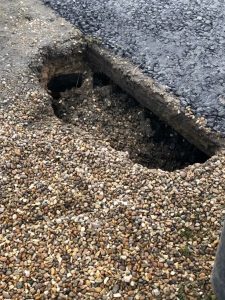
ALS Landscaping is shameless when it comes to its tools. They love nothing more than getting out the big guns, known fondly as ‘Vera’ their vibrating plate compactor. We are aware of others in the trade that may not give this stage the attention it deserves, but at ALS we always compact our sub-base hardcore levels to the correct compaction level. If you’re determined that your driveway will not end up like the image below, get in touch with us today.


Driveway hole

3. Foundations

The Issue – Poor Foundations

Improperly installed foundations are one of the main reasons your driveway will sink.

The Solution – British Standard Foundations

When it comes to the depth of the foundations required for your new driveway, there are several factors to consider, including, but not limited to, the length and width of the driveway, the average vehicle type, and the number of vehicles that will be using it, as well as the type of ground the driveway is going to be constructed on. Excavating six to eight inches for your typical driveway is adequate, but in some cases, it may be necessary to excavate up to one foot, as was the case with this project where ALS Landscaping excavated to 300mm deep before installing and compacting the hardcore sub-base to ensure that this driveway is future-proofed against sinking.

According to the National House Building Council (NHBC) building standards 2022, regulation 10.2 (6), the construction of private drives and car parking areas should be constructed in accordance with Table 2d. At ALS Landscaping, and as an award-winning Brett-approved installer, our work is regularly checked to ensure that we exceed British Standards. You know you’re in safe hands.

4. Weight

The Issue – Excessive Weight

If you’re constantly parking heavy vehicles on your driveway, it can cause it to sink over time.

The Solution – Fit for Purpose

At ALS Landscaping we understand that your new driveway is an investment that you expect to last. That’s why we always undertake a full site inspection, prior to providing you with a quote, to ensure that your new driveway will not only complement your property and fit in the space available but will also be fit for purpose and stand the test of time. Prior to our site inspection, we’ll be asking you questions about how you’re intending to use your driveway, including the types and number of vehicles you be expecting to park on it. This will help us to ensure that we give you the best advice regarding driveway surfaces suitable for your specific needs, whether that’s block paving, resin bound, or more traditional surface finish, such as concrete and tarmacadam. We’ll ensure you get a driveway that’s built to last.

And last, but by no means least…

5.Tree Roots

The Issue – Tree Roots

If the roots of trees in the vicinity of your driveway have not been removed they can continue to grow underneath it and cause it to sink.

The Solution – Adequate Site Preparation

Fail to prepare…prepare to fail. Ensuring your driveway site is fully prepared is not only hard physical work but work that’s crucial if you want your driveway to last. ALS Landscaping takes extra care to remove hidden tree roots that otherwise will cause your driveway to sink. During our inspection visit we’ll let you know if there will be additional remedial work required by accessing the vicinity of your new driveway to determine if any existing trees are likely to cause future issues.

Summary

Having a new driveway installed is a significant investment. An investment that you want to make sure will stand the test of time and be fit for purpose. Don’t leave it to chance. Always use an approved installer like ALS Landscaping in Lincoln.

Interestingly there are no published figures available on how common sinking driveways are in the UK at the time of writing. The likelihood is that since this type of ‘issue’ isn’t generally covered by home insurance, the stats aren’t collated, and so the scale of how common this issue is remains unknown.

If you want to find out more about how we can future-proof your new driveway from sinking, get in touch with ALS Landscaping today. Our team is waiting for your call!


Will A Driveway Add Value To My Property?

YES. Installing a driveway will add value to your property.

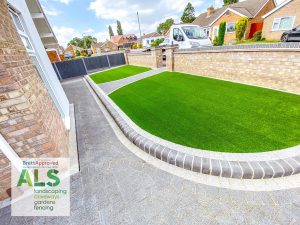
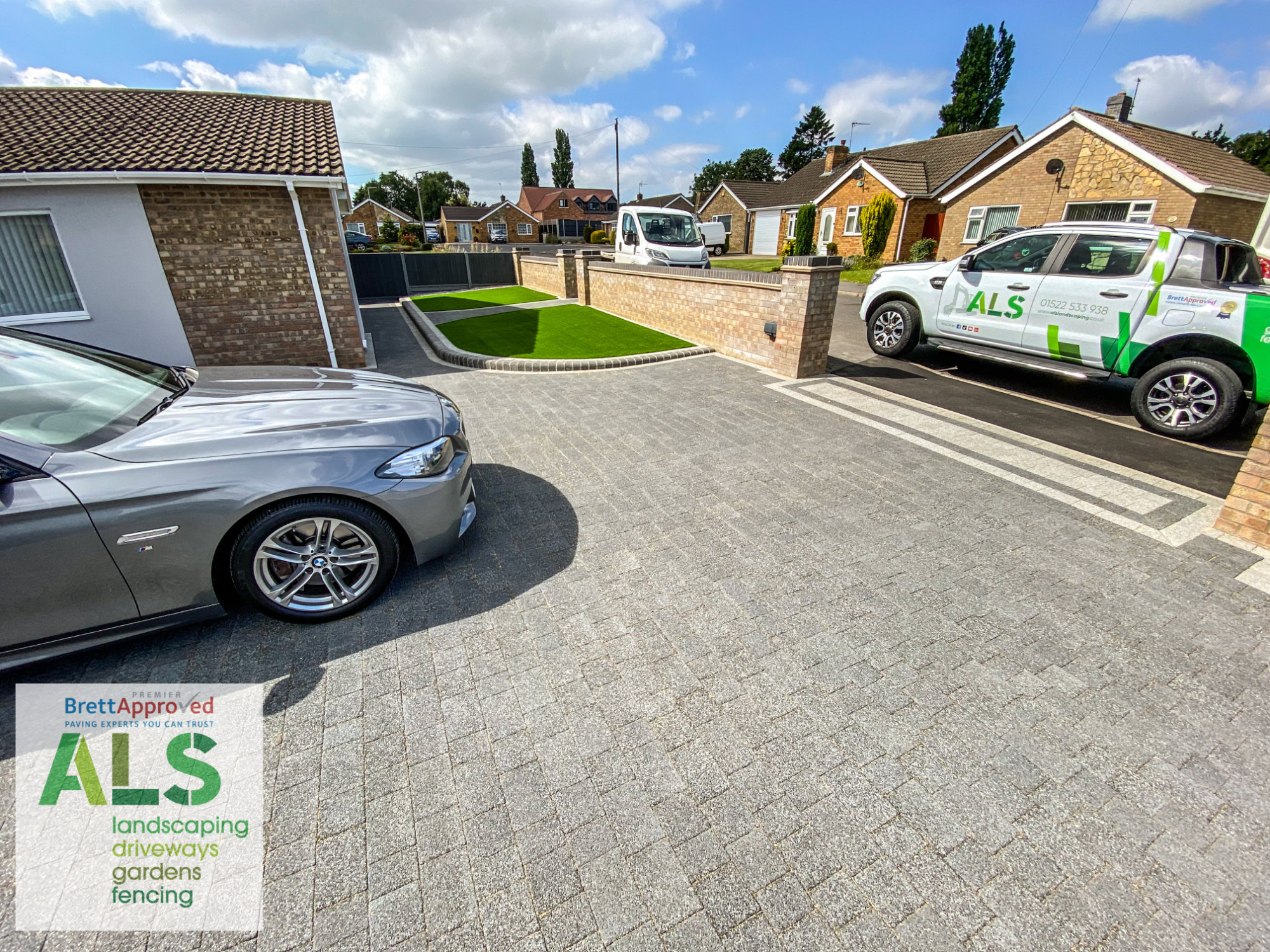
Driveway in Lincoln installed by ALS Driveways
Driveway in Lincoln installed by ALS Driveways.

The value of your property will increase (on average) anywhere between 2% and 10% (2022) when you have a new driveway installed. The increase in value will depend on the location of the property, the materials used, the size, and the impact of the kerb appeal.

In this guide, we look at whether a new driveway will add value to your home, whether that’s for resale purposes, or because you’ve made the decision to stay put. As expert driveway installers we’ve seen and installed everything from a basic concrete driveway to an all-singing and dancing resin-bound driveway, expertly edged with contrasting block paving.

Keep reading to find out how and why a driveway will add value (regardless of the upfront costs).


Is It Worth Getting A New Driveway?

A new driveway is an affordable home improvement. When it comes to adding value to your home, it’s not the first item on the list of recommended improvements, nor the one that necessarily will add the most value, but it will add value. In today’s economic climate, anything that adds value is worth considering.

Before taking the plunge and booking your driveway installation for 2023 look at the street, cul-de-sac, avenue, or lane outside your home. Are there plenty of on-street parking spaces, or do you find yourself leaving work early just so you can get a space somewhere relatively close to where you live? If it’s the second option, then installing a driveway should be moving up your ‘wanted’ list of renovations rapidly.

Imagine no longer having to mow the front lawn. Stop there for a second. Not only will it save you a good few hours a year watering, fertilising, weeding, and maintaining your perfectly manicured lawn (to keep up with the Jones’s next door), your new driveway will be virtually maintenance-free. If you’re looking for a way to save precious time, you might just have found the solution! You’ll also be doing the environment a favour too by not adding chemicals to the mix.

Now picture this. You’ve just done the BIG shop. No, the BIG shop. It’s still 2022 remember, and you haven’t got a driveway (yet). You’re late. It’s cold, and it’s snowing. There are no parking spaces available in your street. Nope. No parking spaces available on the next street either.

Do you:

  1. Leave the BIG shop in the car, and hope it stops snowing soon (so you can come back later)?
  2. Stay in the car (with the heater still turned on) hoping it stops snowing soon (and hoping the frozen food doesn’t start to defrost)?
  3. Make two (no three) trips with the BIG shop back to the house (and wish you’d had the driveway installed sooner)?

Joking aside. We’ve all been there. At some point, we’ve all tried hard to manifest that elusive parking space. Having your own driveway means that you never have to worry about finding a space when getting home from the BIG shop again.

An article published by John Minnis Property in June 2022, quoted research conducted by Ideal Homes. They found that 84% of homeowners looking to buy a new home, said that not having a driveway could be a deal breaker which means that only 16% of the respondents questioned would buy a house without one. You can read the full article here. If selling your home is something you’re considering, installing a driveway could be the solution to getting a premium price and a quick sale.

Could A Driveway Save Me Money?

Great question! It’s another YES. Having a new driveway installed could save you money. Most insurers reduce your policy premium if you park your car on a driveway overnight. And in the last paragraph, we talked about saving money too. Where on-street parking is limited, you may need to purchase a residential parking permit; some of these are in excess of £1,000 per annum. That’s another saving right there.


Is Having A Driveway Safer?


YES. It’s safer for your car AND your children. A well-lit driveway acts as a natural deterrent to car thieves; if there’s an easier target parked on the road, that will always be their first choice. More cars are stolen and broken into when parked on the street. Having your car parked where you can ‘see’ it overnight, and where your CCTV cameras can capture any motion, will always make your car less of a target.

If your home is on a busy street, and you have children, getting them into the car safely on the street can be a hazard that’s worth avoiding. It’s not just about worrying about oncoming vehicles, you also need to make sure you’ve got enough room to open the doors wide enough to get the children out safely. Then there’s the hassle of swapping the car seats into another household vehicle when the need arises. Having your own driveway will give you all the room you need to keep everyone safe.


Summary


Having a driveway installed will add more than just value to your property. It will add convenience, kerb appeal, and safety. It will also save you time and money. It’s always a good idea to do some research, as with any home improvement – remember to ask your local estate agents for their advice. We’ve yet to install a driveway that didn’t add value!

At ALS Landscaping our mission is to provide YOU with the driveway of your dreams, amongst other things. And in our usual way, we’re NOT afraid to tell you the truth about whether having a new driveway installed will add value to your property.

ALS Landscaping is different. We’re experts and we’ve been installing driveways for more than twenty years. We’re Premier Brett Approved installers, which means that when you trust us to install your driveway you get more than just a dream driveway, it comes with a ten-year product guarantee and a five-year installation guarantee! Click the image below to find out more.


If you’re ready to get in touch, complete the quote request here and we’ll be in touch.